
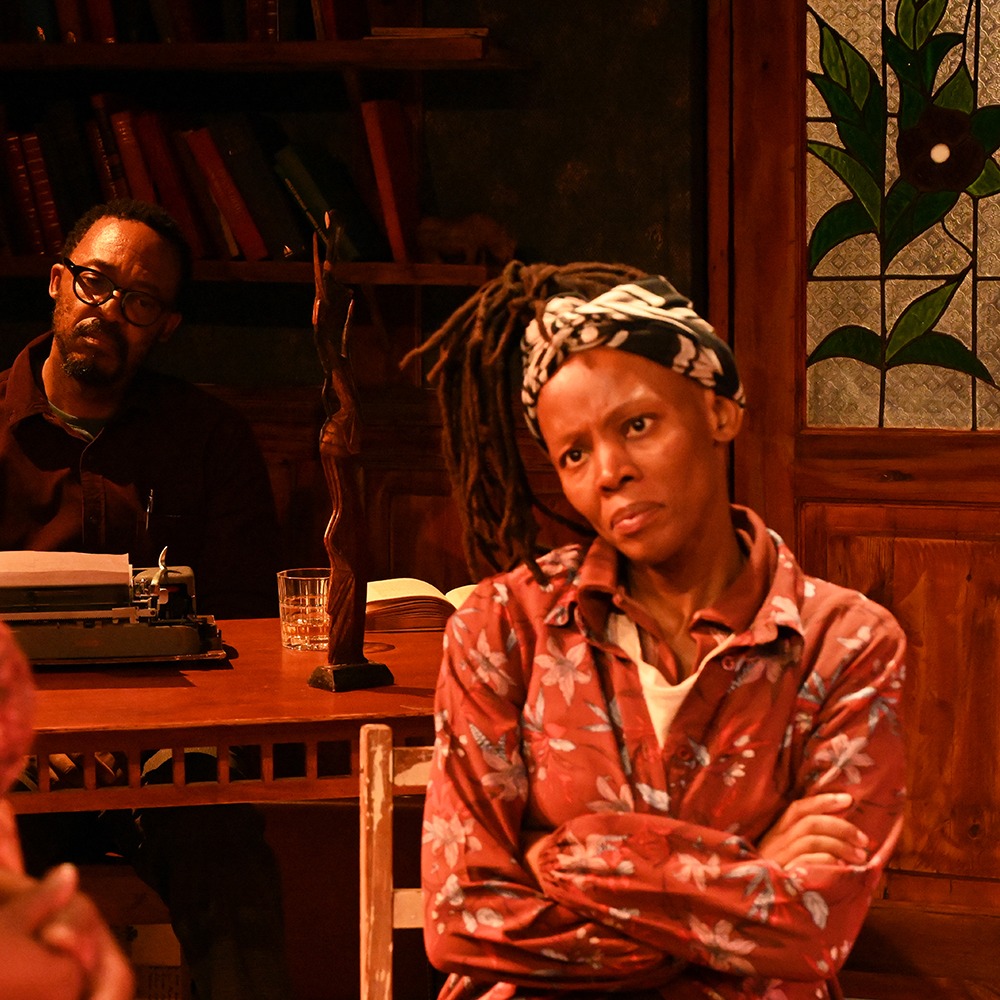
The Cry of Winnie Mandela is a conversation between makers and a relevant example of how collaboration shapes South African theatre. Playwright Alex Burger draws on the fictional book of the same name written by novelist Njabulo S. Ndebele. In the world of the play, the women characters join forces with the play’s writer-narrator to bring truth to the words he writes about their lives. Most significantly in uniting these conversations, the director, MoMo Matsunyane, speaks to the original novel, gives life to the text and its characters, and, together with her cast, aims to imbue the spirit of Mam’ Winnie Madikizela Mandela into the work. Through prayer, searching, and playing, MoMo Matsunyane weaved these relationships together and presents an offering that resonates with many.
Twenty-one years in the industry have led to this moment in Matsunyane’s career. She began her career as a performer and student at the University of the Witwatersrand. Following her studies, she was faced with the dilemma of many creatives and graduates — “What do I do now? Where do I go next?” Her answer was to create her own work, to cement her stories rather than waiting to be cast in others’ productions. When I ask her whether local theatre is dying, her answer is a testament to her insistent belief in the industry: “Never.” Rather, she muses with excitement on how much more alive the theatre industry feels, especially after COVID. “And it can never die, not while I’m around.”
Her declaration is the deep velvet of purple, colored with status, boldness, and confidence. She names these characteristics as the reasons why she would choose the color as the most accurate one to describe her. They’re exceptional adjectives to describe her iteration of The Cry, evident in how she and her cast craft the five women characters on stage. They are certainly bold and confident in their storytelling, drawing a direct line to the vibrant power of Mam’ Winnie Madikizela Mandela.
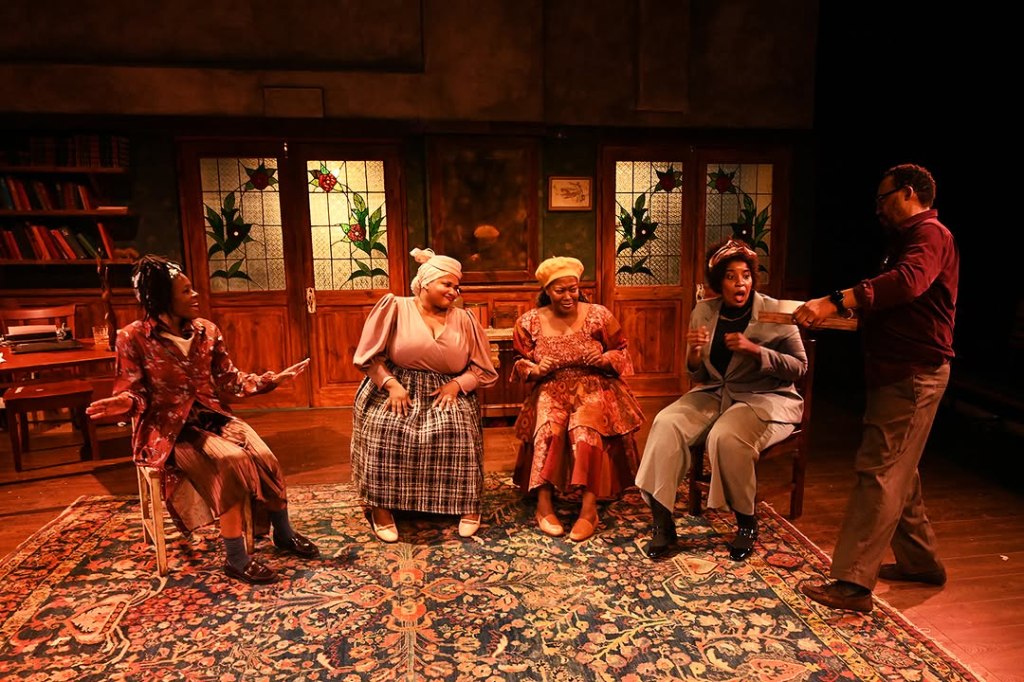
Matsunyane speaks on her desire as a director to humanize the icon and contentious political figure. To do so, she uses the domestic, the personal, and the communal. She locates Burger’s script in a living room and molds the four women characters from the book into a group reminiscent of amasociety, iitokvel, or women’s church groups. It feels essential that the work exists in this shape, in a communal space of familiarity to many black women in the country. It is particularly important, she and I discuss, that she was able to introduce this element of black South African womanhood. While it is in no way the blanket experience for black women, it adds important color to the work because the text itself appears to center the women’s stories in their waiting and longing for their husbands and male partners.
Through Matsunyane’s choices, we get a tiny look into the women’s stories and their relationships to each other outside of their role as wives. In many ways, the community created adds texture to a text that seems singular in its focus on women as extensions of their partners.
On how they approached Mam’ Winnie’s story, Matsunyane says, “We connected to Mam’Winnie through prayer. Prayer is very important in my rehearsal spaces. We began by seeking her permission to tell her story… And I feel the success the play experienced is a testimony to her presence and permission.”
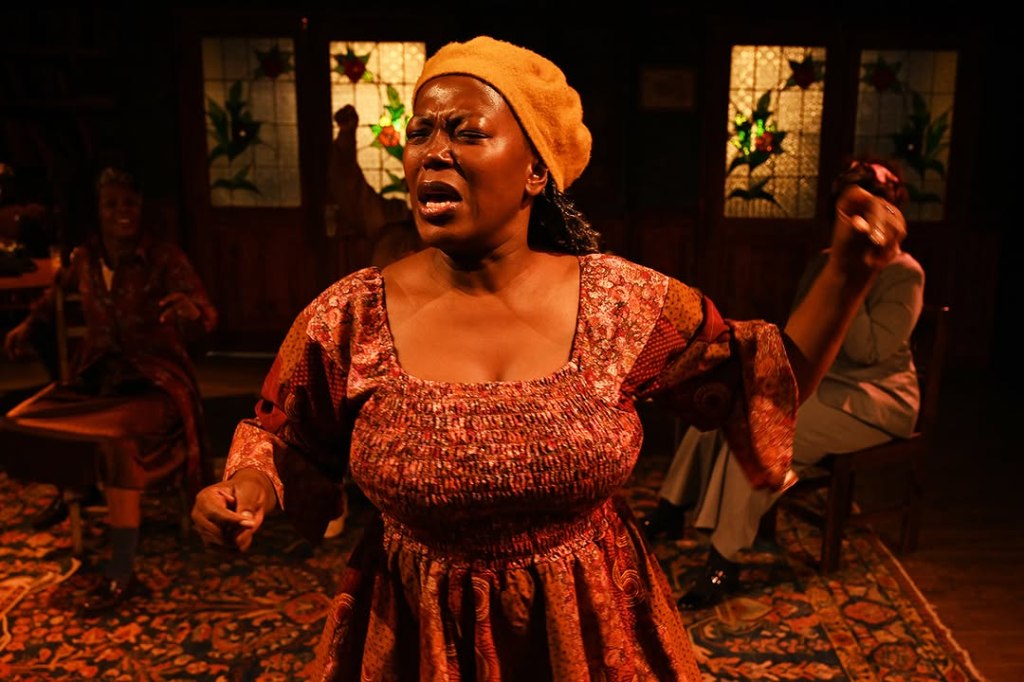
The production has indeed received much acclaim, with runs in Joburg and Cape Town, private runs requested, and packed-audience runs. Audiences demanded an encore, and the most recent run was extended by another week at the Market Theatre, closing this past Sunday. The play’s success is a reflection of Matsunyane’s evolving career and powerful presence in modern South African theatre. When we reflect on her career in the interview, she points to her Standard Bank Young Artist Award for Theatre as a significant turning point that allowed her to “be seen” as an independent artist. As her first mainstream directing commission, The Cry is surely only the beginning of much more. Her next project, Have You Seen Zandile?, opens at the Soweto Theatre on April 15th.

 Culture Club - Magazine