
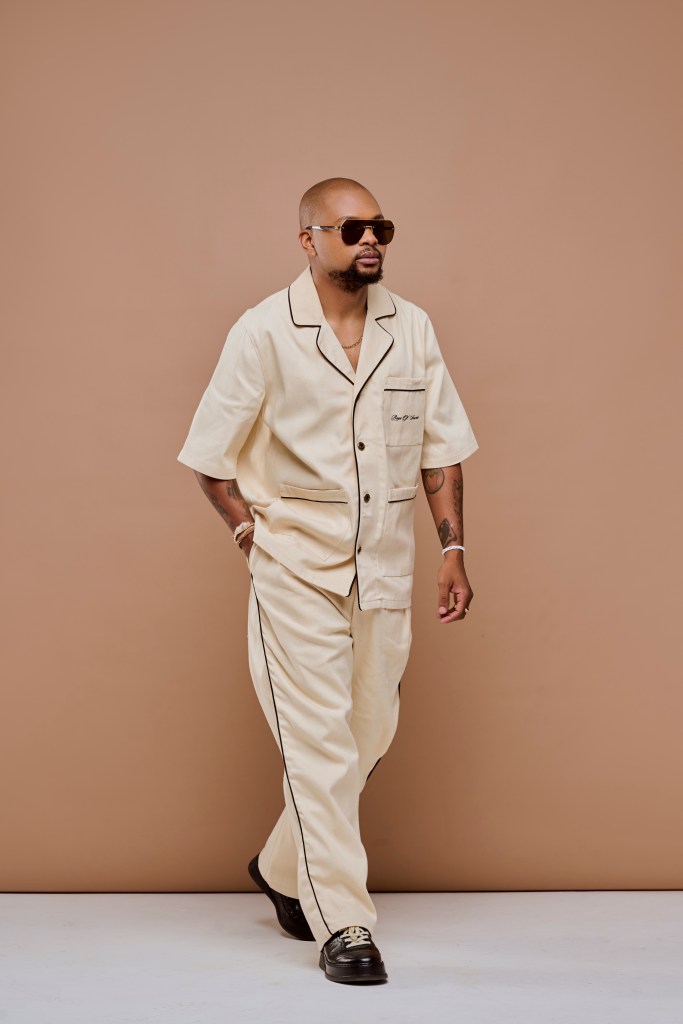
Josiah Makoela, commonly known as Josiah De Disciple, is a South African DJ and record producer who has dubbed himself the spiritual/tribal amapiano expert. With the release of his new album, Saroti, Josiah is entering a new chapter by going back to his roots and tapping into his spiritual side. We had the opportunity to ask him a few questions about his music journey and new music, and this is how it went.

1. “Satori” marks a significant milestone in your solo career. Can you tell us about the inspiration behind the album and what message you aim to convey through its tracks?
The inspiration for this particular album is tied to the first few projects that I produced titled, Spirits of Makoela and Spirits of Makoela vol. 2. When interacting with people, a common sentiment shared by many was a plea for me to produce the sound that they have known me for – which is what I enjoyed and have known me to be capable of making. I found that the sound they wanted from me was one that I myself enjoyed. In a sense, we could say I went back to my roots, for this particular album. I had to bring back my spiritual side. The music in Satori is the kind of music that speaks to me. The fans really inspired the music; they inspired this work by reminding me where I come from in my musical journey.
Satori means “enlightenment and awakening”. As an artist and producer, I have always been committed to making music that is inspirational, uplifting, and transformative. With this album, I hope to create a space where listeners can escape the chaos of the world and reconnect with their inner selves.

2. Your music in the Amapiano genre has a distinctive style. How do you balance staying true to your roots while also innovating and evolving your sound?
I believe I have found the musical elements that speak to my soul. And that is why I am able to improvise and spice it up a bit in my production. I have identified what instruments to use that really uplift my soul. With the ever-changing amapiano sound, I always try to mix whatever is trending, with that unique element. So I really believe this is the reason why I am able to maintain the balance.
In terms of the style of music I make, I like to maintain my originality. I can’t necessarily change that much about myself. For creative input, I always try to involve various session musicians just to enhance the music, and the end product always comes out great. For example, if you listen to Satori, the songs like “Buyani”and “Hamba Nedlozi” involved session musicians. We were all deeply involved in the music making process.
3. Amapiano continues to evolve and gain international recognition. How do you see your role in this movement, and what do you believe sets your music apart in the genre?
What sets me apart from everyone in the genre is my kind of musical style. It leans more towards the spiritual-tribal sound of amapiano. When you listen to songs like “Hamba Nedlozi” and “iNtombi” you can get a sense of the sub-genre that I actually produce. I have been known for this style in the game. You can hear it in the music. I am glad that I have established myself as this type of producer. With the international recognition that the amapiano genre is gaining, my unique sound is likely to gain traction. I could say that in South Africa as well, there is a small gap for this type of music. And I just want to grow this kind of sound. People know me as the face of spiritual-tribal amapiano and the best way to grow it is to produce more songs. And the more songs I have, the better the chances of it reaching the international market. I have no intention to modify myself for the international market though.
4. Collaboration has always been a key part of your work, both in JazziDisciples and as a solo artist. Are there any new artists or producers you’re particularly excited to work with in the future?
Definitely, there are a couple of artists that I would like to work with. I have always had a list of the OGs in the game because I used to look up to those people growing up. So, for old times sake, I would say Thandiswa Mazwai is one artist I would like to work with. I wish that could still happen., I would also like to work with vocalists like Bucie. In terms of new rising artists, I would say Mellow-bone from Bloemfontein, Zee Nxumalo, Eemoh, Starr Healer, as well as Nobuhle. I am definitely open to collaborating.
5. Your fans are always eager to know about your future projects. Can you share any upcoming plans or goals for your music career following the release of “Satori”?
I plan on releasing a couple of collaborative EPs with some of my industry peers. I am excited about all these collaborative projects and making more music. I also plan to shoot more music videos for my Satori project. I have since released one for the lead single, ‘Kuzoba Ncono’. It would be great to shoot more visuals to accompany the Satori project.
 Culture Club - Magazine