
In this enlightening interview article, we embark on a captivating journey through the thought-provoking exhibition ‘Umbhedesho.’ This title, inspired by a gospel song frequently sung in the sanctity of a church, resonates with the belief in God as the supreme creator. Originating from the isiZulu and isiXhosa languages, ‘Umbhedesho’ beautifully translates into a religious doctrine that stands as an unwavering truth.
But our exploration doesn’t stop there. We had the privilege of engaging with four exceptionally talented artists, each offering their unique perspectives on their artistic journeys. Through their insights and creative endeavours, we gain a deeper understanding of the profound layers of meaning and the intricate tapestry of emotions woven into this remarkable exhibition. Join us as we journey into the minds and hearts of these artists, uncovering the inspiration, processes, and stories behind their compelling contributions to ‘Umbhedesho.’
Puleng Mongale
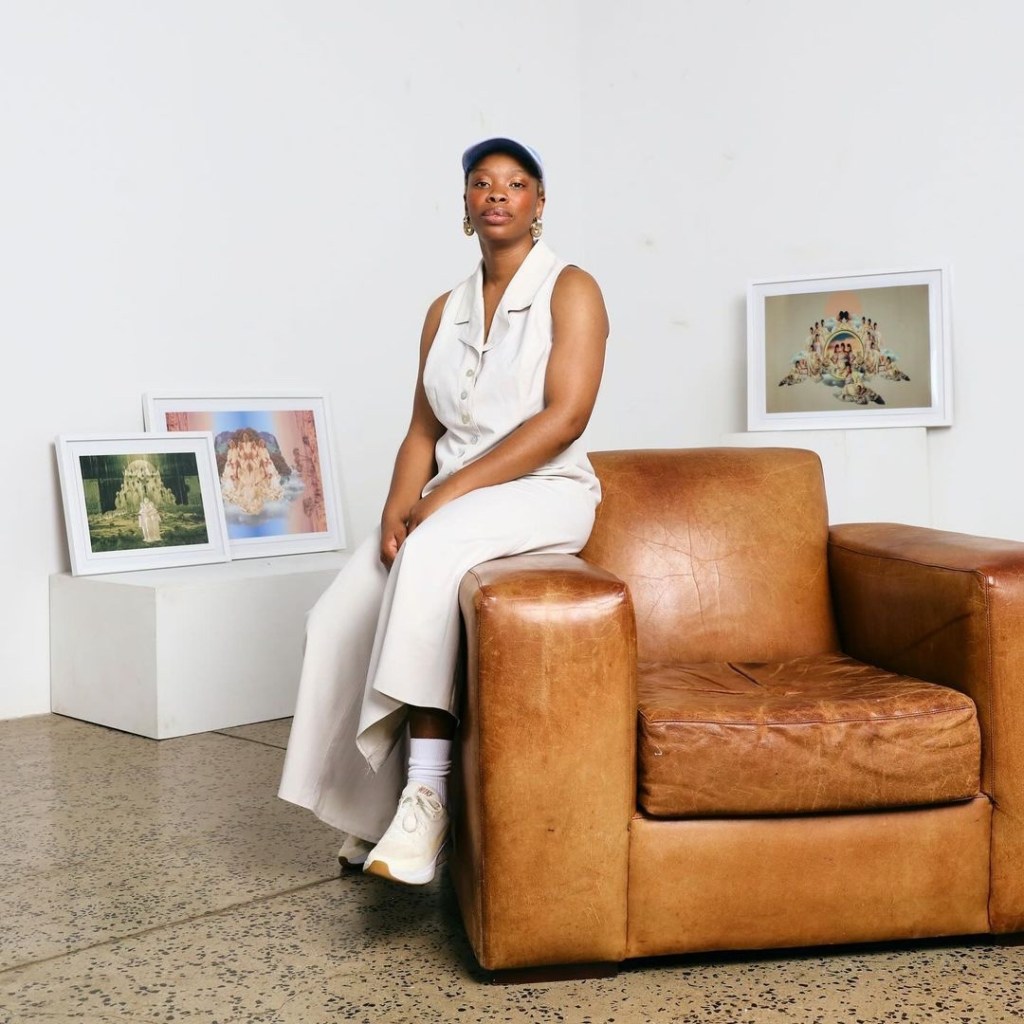
You mentioned that your artistry is not just work, but it is rather personal to you. Does art help you in other areas of your life?
Art has undoubtedly aided me in other aspects of my life. As someone who has struggled with mental illness, creating art has been a cathartic practice, allowing me to imagine alternate worlds when the one I live in makes no sense.
It has also encouraged me to reflect on my life and what it means to be born black and a woman in a post Apartheid South Africa; it has prompted me to ask myself crucial questions while also encouraging me to dream and envision myself beyond what the world has to offer individuals like me, black and a woman.
How does your religious or spiritual belief system influence or inspire the themes and messages in your visual art? Are there specific aspects of your faith that you aim to convey through your work?
Engaging my spirituality has been a crucial act for my survival. Like everyone else, there are times when I experience such anguish that nothing in the world can explain it. Many things are beyond my control as a black, working-class black woman. I feel it is critical for us to know, own, and identify ourselves outside of the confines of a capitalist, white supremacist world, and I believe engaging my spirituality helped me do so. Yes, there is the ‘Puleng’ who lives in this society, and then there is a Puleng who is utterly unaffected by it; what does she look like, who she is, and what is she capable of? That is the message I try to convey through my art, and I hope it prompts others to do the same.
Tshepiso Moropa
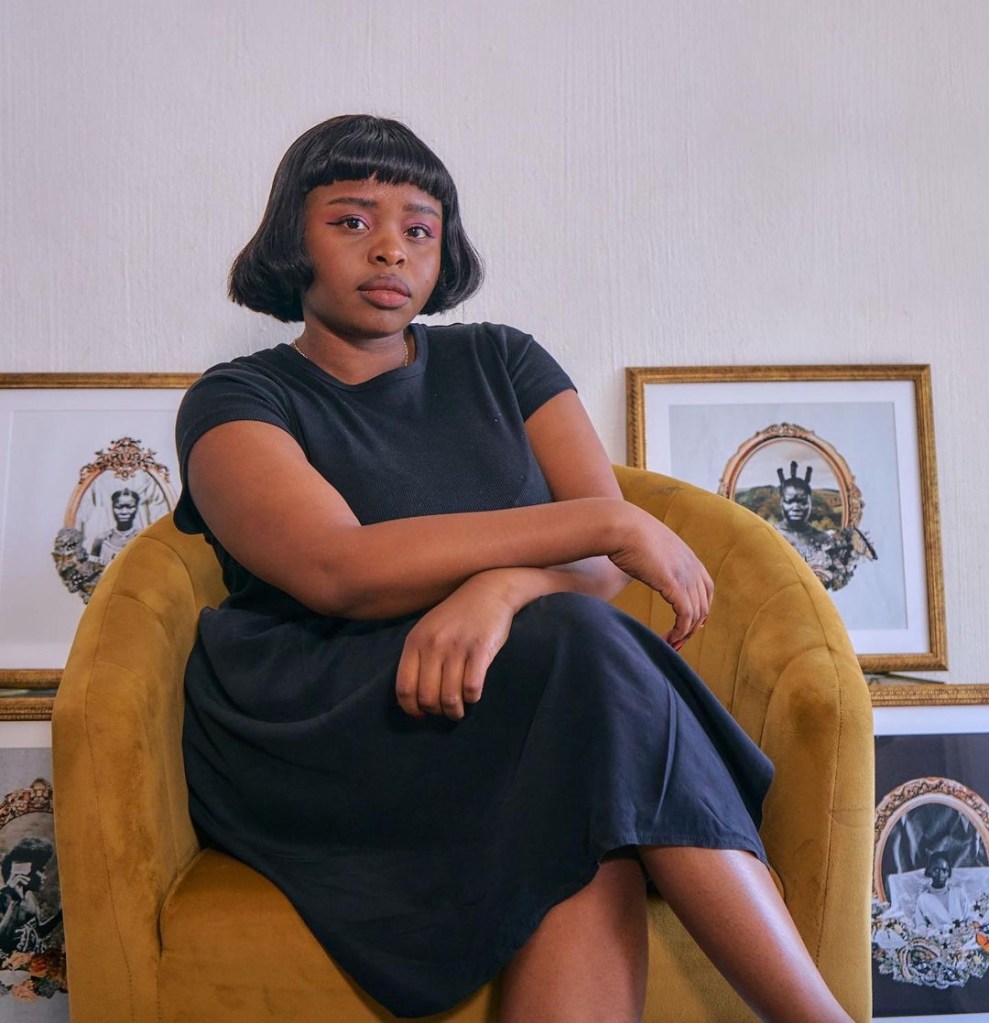
Your work often incorporates archival imagery and the juxtaposition of contrasting materials. How do you select these elements, what role do they play in the narratives you create?
It’s a multi-faceted process. The archival imagery I choose often draws from African history and culture, serving as a bridge between the past and the present. These images are carefully selected based on their historical significance, cultural relevance and their potential to evoke emotions or spark curiosity. In terms of contrasting materials, I believe that the interplay of different textures, colours and materials adds layers of meaning to my work. For example, juxtaposing delicate, weathered photographs with vibrant, contemporary fabrics creates a dynamic tension that underscores the complexity of the narratives I wish to convey.
The role of these elements in my work is to craft narratives that resonate with viewers. The archival imagery serves as a window into history, while the contrasting materials represent the evolution of time and culture. By combining these elements, I aim to challenge preconceptions, provoke thought and tell stories that may have been forgotten or overlooked. Each collage becomes a visual conversation between the past and the present, forging connections and inviting reflection on our shared African heritage.
As an artist from Johannesburg, South Africa, how does your cultural background and environment influence your artistic vision and the themes you explore in your art?
My artistic vision is significantly shaped by my cultural background and the environment that surrounds me. My cultural background and the unique environment of Johannesburg combine to shape my artistic identity. It provides me with a rich reservoir of stories, traditions and experiences to draw from, infusing my work with a unique perspective. Through my art, I explore themes of identity and storytelling. These themes are a reflection of the cultural diversity and the constant metamorphosis of Johannesburg and South Africa as a whole. My artistic vision is to capture the very essence of this environment and weave it into a larger narrative that resonates with both local audiences and viewers worldwide.
Lerato Ntili
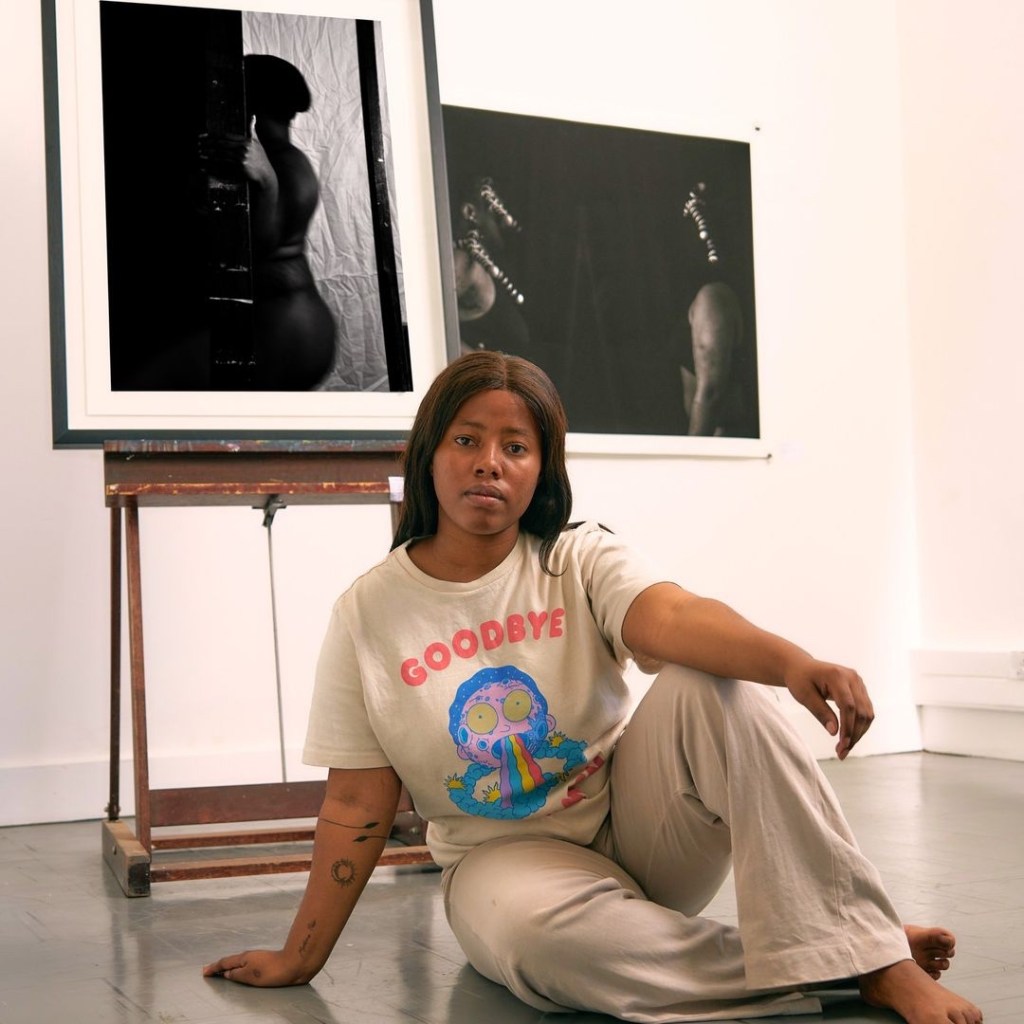
Can you describe your artistic style or the themes you explore in your work?
My artistic style is black and white photography focusing on self portraiture. The themes I explore within my work are the body and the object. The body and object are in constant conversation creating a dialogue, a glimpse of the self is evoked and displayed. An interrogation of the self is presented as the self has become the object and the object has become the self. The play with light and dark brings in the question of what is seen when something becomes concealed.
What influences or experiences have shaped your artistic journey and the direction of your work?
The influences and experiences that have shaped my artistic journey is the journey of navigating body image and what that entails for me. Starting off in a space of revealing parts of myself in order to bring forth confrontation within my struggles and moving into a place where the parts that have been revealed are now being concealed between the dialogue of the object and body. The object now comes into the forefront in a way of taking control of how I as the artist wants the body to be viewed and displayed. My work is now moving into the space of a play with blackness in an ongoing refusal of standards that are constantly imposed within a desire to be seen and unseen, an escape visualised in transparency.
Ruth Motau
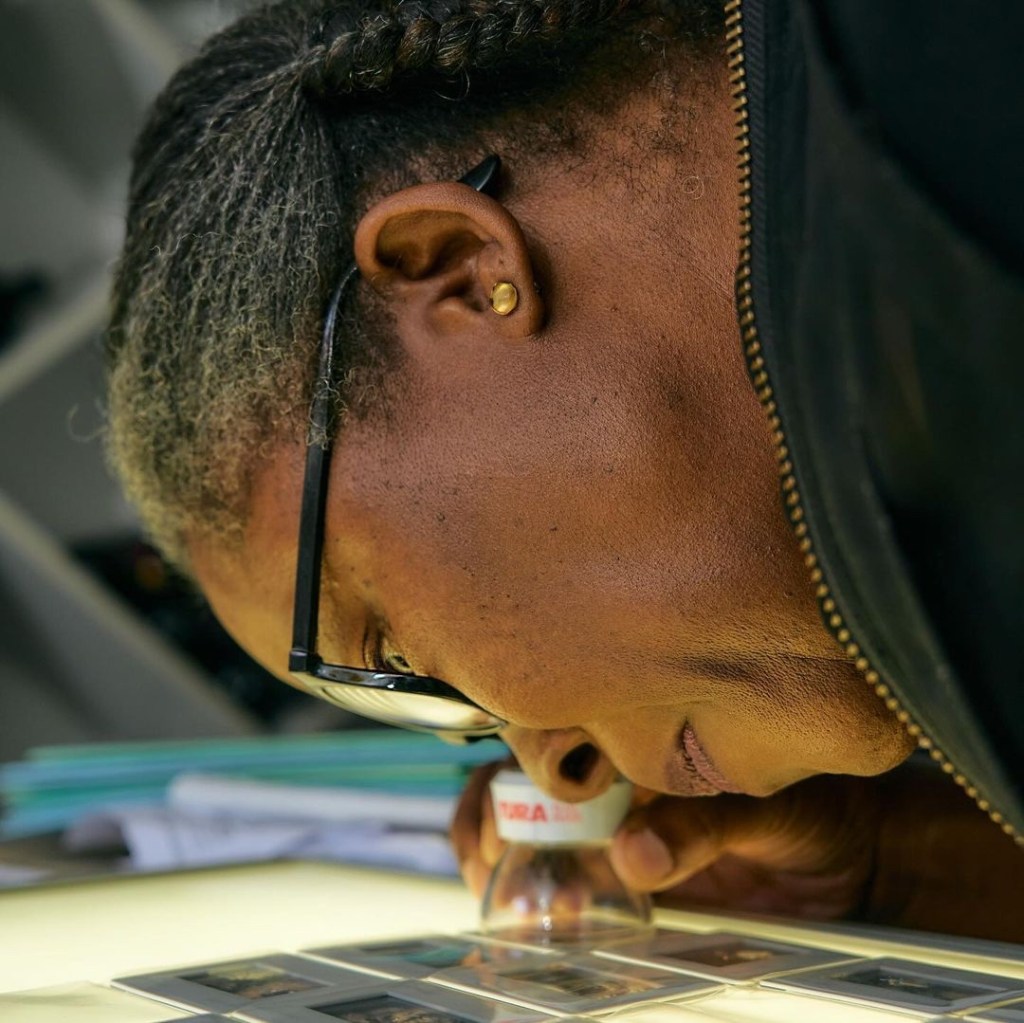
Being defined as the first black female photographer employed by an international newspaper hold quite some weight, what challenges did you face as a pioneer in your field?
Being the first black woman to be employed by an international newspaper by then (Weekly Mail) then (Mail and Guardian) and also being the first black woman to head three major newspapers in the country as a photo editor is a big achievement for the people I always point a camera and freeze those moments that will forever be the evidence of history been recorded and for the next generation to know of where we come from. To all black women who aspire to be photographers and tell their stories I say it is possible.
What do you think of the photojournalism as a medium in this day and age?
Photojournalism these days is more instant, spontaneous, debatable, questionable because of the developing technology. Most of the photographs have a lot of manipulation and most of the time ethics are not applied.

In conclusion, I had the privilege of attending the exhibition opening, and it was an enchanting experience. The fusion of art and spirituality in this space created a sense of serenity that seemed to transcend the boundaries of the physical gallery. The attendees, artists and visitors, were engaged in deep conversations about the art on display, sharing their interpretations and emotions, which added an extra layer of richness & warmth to the cold afternoon.
 Culture Club - Magazine